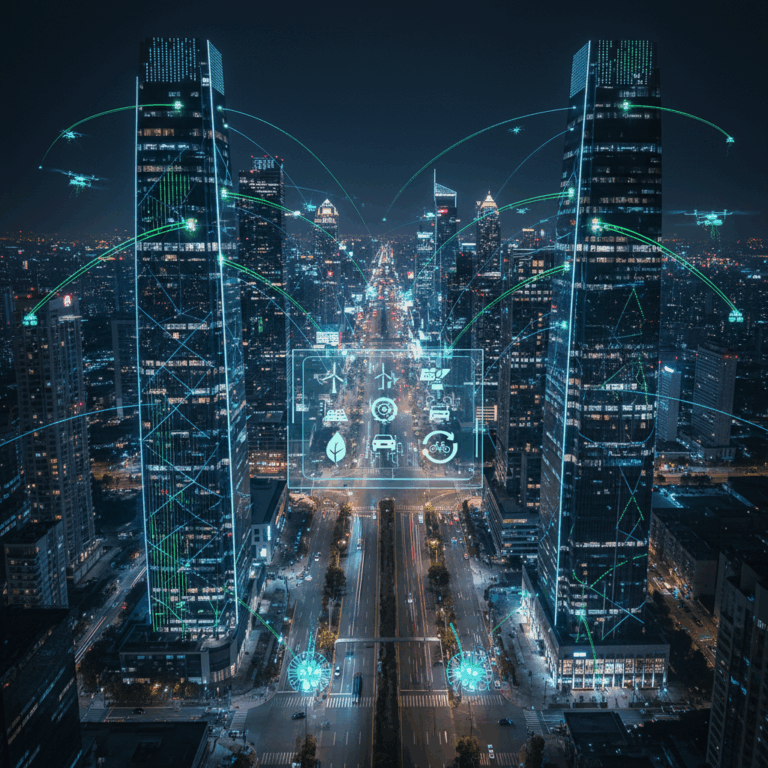
Technologies Driving Smart Cities
The evolution of smart cities depends hugely on advanced technologies that interconnect devices and gather vital data. These innovations make urban environments more efficient and sustainable.
By leveraging real-time information from various sources, cities optimize resources, improve quality of life, and address urban challenges. Smart tech is fundamentally reshaping city management.
From energy conservation to public safety, the convergence of these digital tools empowers smarter decision-making and more responsive services for residents and governments alike.
Internet of Things (IoT) and Sensor Networks
The IoT forms the backbone of smart cities by linking devices, sensors, and infrastructure to collect continuous data. These networks monitor traffic, pollution, and utilities in real time.
Sensor networks enable precise measurement of environmental conditions and resource usage. This data allows systems to react dynamically to changing urban circumstances, enhancing performance and comfort.
For example, sensors in streetlights adjust lighting based on pedestrian activity, reducing energy consumption while maintaining safety. Waste bins equipped with sensors optimize collection routes for cost and environmental benefits.
Artificial Intelligence and Data Analytics
Artificial intelligence processes vast datasets collected from city-wide sensors to uncover patterns and predict urban trends. This supports proactive management and efficient service delivery.
Machine learning algorithms help optimize traffic signals to reduce congestion and analyze energy usage for smarter grid management. AI also improves emergency response through real-time data insights.
Data analytics combined with AI promotes transparency by delivering actionable insights to city officials and citizens, fostering inclusive governance and informed participation in urban development.
Core Smart City Solutions
Smart city solutions apply innovative technologies to improve urban living, focusing on efficiency, sustainability, and citizen well-being. These solutions target crucial city functions such as traffic, energy, waste, and public engagement.
By integrating data from interconnected devices, cities deploy systems that adapt dynamically to real-time conditions. This adaptability helps reduce costs, lower environmental impacts, and enhance service quality for residents.
From managing complex transportation networks to enabling citizen feedback, these core solutions form the foundation for smarter, more responsive urban environments.
Smart Traffic and Transportation Systems
Smart traffic systems utilize sensors and AI to monitor road conditions and dynamically adjust traffic signals, minimizing congestion and improving flow. This leads to reduced travel times and lower emissions.
By analyzing real-time data, these systems can reroute vehicles during peak hours or emergencies, optimizing public transport schedules and enhancing commuter experiences.
Integration with mobile apps also empowers citizens with up-to-date travel information, enabling better route planning and promoting the use of sustainable transport modes.
Intelligent Energy and Lighting Management
Intelligent energy systems leverage sensors and analytics to optimize electricity consumption across cities. Streetlights automatically adjust brightness based on presence, saving energy without compromising safety.
Smart grids balance supply and demand efficiently, incorporating renewable energy sources and enabling rapid response to consumption changes.
This approach lowers utility costs and reduces environmental footprints, helping cities meet sustainability targets while ensuring reliable energy delivery for all.
Sensor-Based Waste Management
Sensor-equipped waste bins communicate fill levels to collection services, allowing for optimized routing and scheduling of garbage trucks. This reduces unnecessary trips and operational expenses.
Such systems improve cleanliness and reduce odors, pollution, and greenhouse gas emissions related to waste handling.
Data from sensors informs long-term waste reduction strategies, encouraging recycling and waste diversion through better resource management.
Citizen Engagement Platforms
Digital platforms enable residents to report issues, provide feedback, and access city data, fostering transparency and participatory governance.
These tools encourage community involvement by simplifying communication between citizens and municipal authorities, speeding up problem resolution.
Engagement platforms also support awareness campaigns and public consultations, empowering people to contribute actively to urban development decisions.
Benefits and Impacts of Smart City Technologies
Smart city technologies significantly enhance urban sustainability by optimizing resource use and reducing environmental impacts. These innovations lead to more efficient energy and water consumption.
By integrating data-driven systems, cities can minimize waste, lower pollution, and conserve resources, creating healthier environments and promoting long-term ecological balance for residents.
Additionally, these technologies support economic growth by improving infrastructure management and reducing operational costs, making urban living more affordable and sustainable.
Enhancing Sustainability and Resource Efficiency
Smart city solutions utilize real-time data to improve resource management, such as optimizing energy grids to reduce waste and support renewable sources. This enhances overall efficiency.
Efficient water management systems monitor usage and detect leaks, preventing loss and ensuring sustainable supply. Waste management benefits from sensor data to reduce unnecessary collections and emissions.
These practices contribute to lowering carbon footprints, protecting ecosystems, and enabling cities to meet environmental goals while maintaining essential services for their populations.
Improving Urban Life Quality and Public Safety
Technologies in smart cities improve quality of life by reducing traffic congestion, which decreases noise and air pollution, enhancing health and wellbeing for residents.
Public safety is strengthened through AI-powered surveillance and predictive analytics, enabling faster emergency responses and more effective crime prevention strategies.
Furthermore, smart lighting adjusts to human presence, improving street safety at night, and citizen engagement platforms foster trust by making governance more transparent and responsive.
Global Examples and Future Trends
Smart city initiatives around the world showcase how advanced technologies improve urban life. Cities like Santander, Singapore, and Amsterdam lead by example with innovative implementations.
These global leaders demonstrate the potential of IoT, AI, and data analytics to create smarter, more sustainable cities that address modern urban challenges effectively.
Their success stories inspire ongoing efforts to enhance city resilience, engage citizens, and optimize resources for future urban development worldwide.
Smart City Implementations in Santander, Singapore, and Amsterdam
Santander uses over 20,000 sensors citywide to monitor traffic, environmental factors, and public services in real time, enabling precise urban management and quick responses.
Singapore integrates smart traffic systems, energy-efficient lighting, and extensive citizen engagement platforms, fostering sustainability and improving quality of life for residents.
Amsterdam combines intelligent energy networks and sensor-enabled waste management with open data initiatives, promoting transparency and encouraging innovation from local communities.
Unique Features of These Cities
Each city adapts smart solutions to its specific needs, such as Santander’s focus on environmental monitoring and Singapore’s emphasis on public transport efficiency.
Amsterdam’s approach highlights citizen participation and sustainability, creating a replicable model for cities seeking balanced technological and social development.
Emerging Technologies and Urban Challenges
Future smart cities will increasingly adopt 5G connectivity, edge computing, and AI-driven predictive analytics to enhance real-time decision-making and infrastructure management.
However, urban areas face challenges like data privacy concerns, cybersecurity risks, and the digital divide, which require careful planning and inclusive policies.
Addressing these issues is crucial to ensure technology benefits all residents equally while maintaining trust and safeguarding sensitive information.