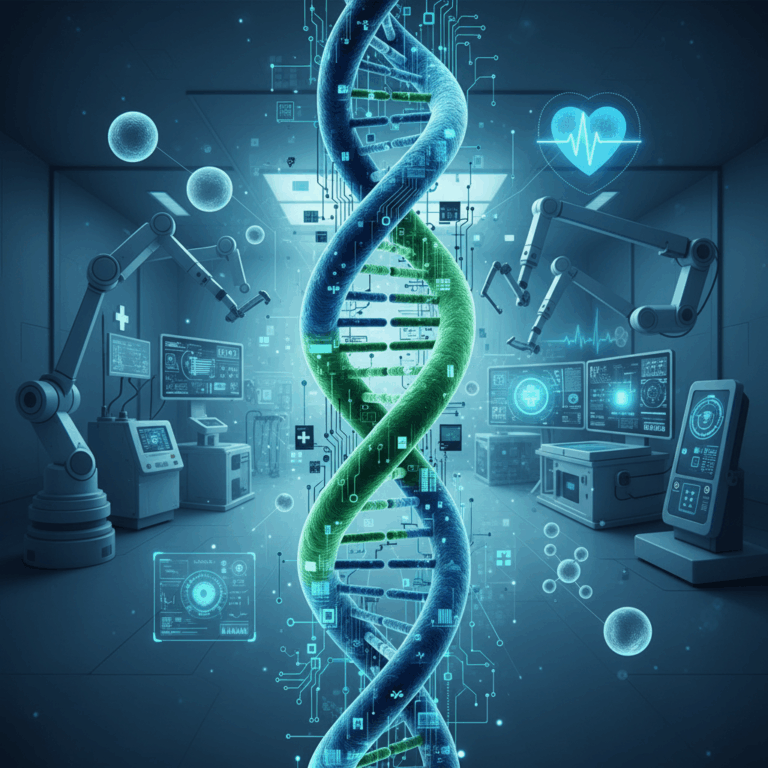
Gene Editing Advances in Medical Technology
Gene editing technologies have profoundly transformed medical research, moving rapidly from laboratory experiments to clinical applications. This progress is revolutionizing treatments for a wide range of genetic disorders and diseases.
Among these technologies, CRISPR-based therapeutics stand out for their precision and potential to correct mutations at the DNA level. This innovation promises to address diseases at their genetic root rather than merely managing symptoms.
As gene editing evolves, newer techniques like base editing and prime editing are enhancing the scope of possible modifications, making treatment safer and more effective. These advances are reshaping personalized medicine and expanding therapeutic options.
CRISPR-Based Therapeutics and FDA Approvals
CRISPR technology has moved from experimental use to FDA-approved therapies, signaling a new era for genetic medicine. Several CRISPR-based treatments now target previously incurable genetic conditions, providing hope for patients worldwide.
These therapies edit faulty genes by cutting DNA at precise locations, allowing the body to repair or replace defective sequences. This precision reduces off-target effects and improves patient safety compared to earlier methods.
With ongoing clinical trials and regulatory endorsements, CRISPR-based approaches are becoming a mainstream tool in treating cancers, autoimmune diseases, and rare inherited disorders. This transition marks a significant milestone in medical biotechnology.
Innovations: Base Editing and Prime Editing
Base editing and prime editing represent cutting-edge refinements of the original CRISPR system, allowing for even more accurate and versatile DNA modifications. These techniques change single DNA bases or insert new sequences without causing double-strand breaks.
Base editing enables the correction of point mutations with minimal damage to surrounding DNA. Prime editing further expands capabilities by enabling precise insertions, deletions, and all 12 types of DNA base substitutions, broadening therapeutic applications.
Clinical Potential and Research Outlook
Both innovations promise safer genetic therapies, reducing unintended consequences seen in traditional gene editing. Ongoing research explores their use in treating genetic blindness, muscular dystrophy, and blood disorders, paving the way for future cures.
Biomedical Engineering Innovations
Biomedical engineering continues to revolutionize healthcare by developing advanced devices that enable personalized treatment and improve patient outcomes. These innovations focus on real-time health monitoring and precision therapy.
From wearable technology that tracks vital signs continuously to implantable systems delivering drugs directly to target sites, these tools reduce invasive procedures and maximize treatment efficacy. The integration of sensors and smart algorithms underpins their success.
Additionally, non-invasive diagnostic tools and neuroprosthetics are expanding capabilities for early disease detection and neural rehabilitation, offering new hope for patients with chronic and neurological conditions.
Wearable Devices for Personalized Health Monitoring
Wearable devices have become essential for personalized healthcare by continuously tracking metrics like heart rate, glucose levels, and sleep quality. This data supports real-time health management and early intervention.
Modern wearables combine biosensors with AI algorithms to provide actionable insights, helping patients and clinicians tailor treatments. They empower users to monitor chronic illnesses such as diabetes and cardiovascular disease effectively.
These devices also improve patient engagement and preventive care by alerting users to abnormalities and encouraging healthier lifestyle choices, ultimately reducing hospital visits and healthcare costs.
Implantable Devices and Targeted Drug Delivery
Implantable biomedical devices enhance therapeutic precision by delivering drugs directly to affected tissues, minimizing systemic side effects. These systems improve patient adherence and treatment outcomes.
Examples include microchips and pumps that release medication on demand, responding to physiological signals. This innovation is especially beneficial in managing cancer, autoimmune disorders, and chronic pain.
Such devices allow for dosage customization and can be remotely controlled or programmed, bringing a new level of sophistication to chronic disease therapy and post-surgical recovery.
Non-Invasive Diagnostic Tools
Non-invasive diagnostic technologies are transforming how diseases are detected by reducing patient discomfort and procedure risks. Devices like pill-sized cameras and advanced imaging systems facilitate thorough internal examinations safely.
These tools improve early detection rates and help monitor disease progression without the need for surgery or invasive biopsies. This advancement is crucial for gastrointestinal, cardiovascular, and respiratory conditions.
By integrating miniaturized sensors and wireless data transmission, these diagnostics offer convenience and speed while maintaining high accuracy, streamlining clinical workflows.
Neuroprosthetics and Brain-Machine Interfaces
Neuroprosthetics and brain-machine interfaces (BMIs) provide revolutionary options for restoring function in patients with neurological impairments. These devices translate neural signals into commands to control prosthetic limbs or computers.
BMIs enable communication and mobility restoration for individuals with paralysis or neurodegenerative diseases, significantly enhancing their quality of life. Development focuses on improving signal accuracy and device integration.
Ongoing research aims to expand these interfaces’ capabilities, allowing for bidirectional communication between the brain and devices, which could one day restore sensory feedback and cognitive functions.
Smart Surgical Technologies
Smart surgical technologies are reshaping the operating room by integrating advanced AI and sensor systems. These innovations enhance precision, safety, and efficiency during complex surgical procedures.
By combining real-time data analysis with intelligent hardware, surgeons receive immediate feedback and improved control. This approach is advancing personalized surgical care and better patient outcomes.
Integration of AI and Sensor Technologies in Surgery
The integration of AI with sensor technologies allows surgical instruments to analyze tissue properties and detect abnormalities instantly. Sensors embedded in tools monitor vital signs and tissue integrity throughout procedures.
AI algorithms process sensor data to assist surgeons in identifying critical structures, reducing the risk of damage to healthy tissues. This synergy supports minimally invasive techniques and faster recovery.
These smart systems also learn from accumulated surgical data to continuously improve performance, enabling adaptive responses during operations that increase precision and success rates.
Real-Time Decision Support and Personalized Planning
Real-time decision support integrates AI-driven insights with preoperative imaging to guide surgical planning and intraoperative adjustments. Surgeons can adapt strategies dynamically based on patient-specific data.
This personalized planning enhances accuracy by predicting potential complications and suggesting optimal intervention paths. The result is tailored surgeries that minimize risks and improve outcomes.
Such technology empowers surgical teams with visual overlays, alerts, and recommendations, creating a collaborative environment where human expertise and AI capabilities merge effectively.
Artificial Intelligence in Biotech and MedTech
Artificial intelligence (AI) is revolutionizing biotech and medtech by enhancing early disease detection, accelerating research, and enabling more precise treatments. Its integration is transforming healthcare landscapes.
From biomarker discovery to personalized therapeutic approaches, AI algorithms analyze vast datasets with speed and accuracy. This data-driven insight supports better patient outcomes and innovative medical solutions.
AI-Driven Early Disease Detection and Biomarker Discovery
AI-powered systems excel at identifying subtle disease indicators that humans may overlook, improving early diagnosis. These methods leverage machine learning to analyze complex biological data patterns efficiently.
Biomarker discovery benefits greatly from AI’s capacity to integrate genomic, proteomic, and clinical data. This advancement helps pinpoint novel biomarkers critical for diagnosing conditions like cancer and cardiovascular diseases early.
Accelerated biomarker identification shortens the timeline from research to clinical use, facilitating targeted treatment development. This fosters a proactive approach to healthcare, reducing morbidity through timely interventions.
Precision Medicine Enabled by Nanomedicine and AI
The marriage of AI and nanomedicine advances precision medicine by allowing ultra-targeted drug delivery and customized therapeutic strategies. Nanoparticles guided by AI enhance treatment efficacy and reduce side effects.
AI models analyze patient-specific variables to optimize nanomedicine formulations and dosages. This tailored approach enables highly effective therapies for complex diseases, including cancer and atherosclerosis.
Future Outlook on AI and Nanomedicine
Ongoing research is expanding AI’s role in designing nanomaterials and predicting their interactions within the body. Such innovations promise smarter, safer treatments that respond dynamically to patient needs.
The synergy of AI and nanotechnology is poised to reshape drug development pipelines and clinical protocols, driving a new era of precision healthcare accessible to diverse populations worldwide.