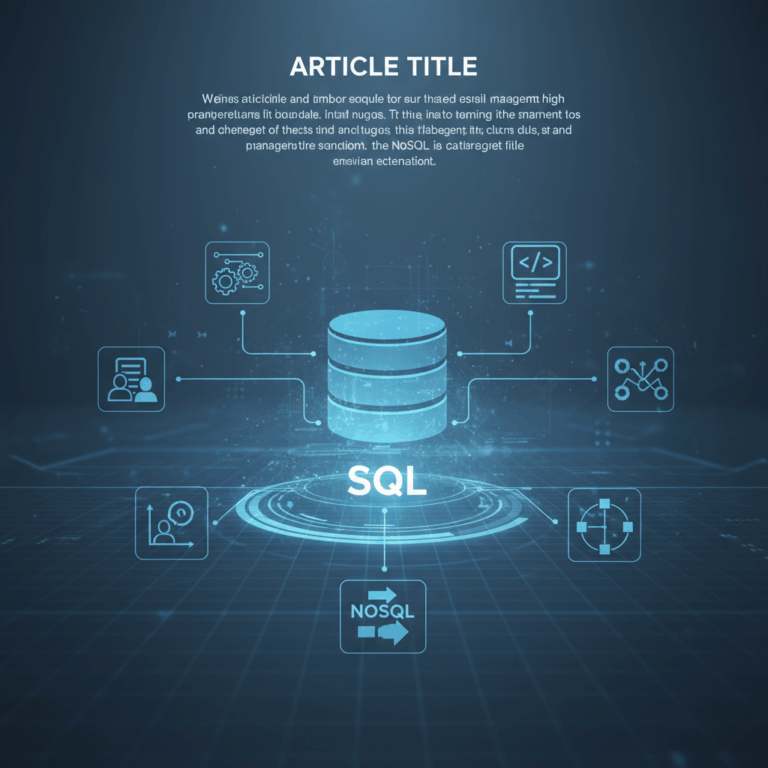
Overview of Database Management Tools
Database management tools are essential software that enable users to efficiently handle data in both relational and non-relational systems. These tools simplify tasks like querying, organizing, and maintaining data.
By offering interfaces for data visualization, optimization, and administration, these tools support IT professionals and data analysts in delivering actionable insights across various database types.
Purpose and Functions of Management Tools
Management tools serve to facilitate interaction with databases by providing features such as query execution, schema design, and performance monitoring. They enhance data accessibility and integrity.
Additionally, these tools enable data import/export, backup, replication, and security implementation, ensuring comprehensive control over database environments and safeguarding data assets.
Whether managing large transactional systems or flexible schema stores, database tools streamline maintenance and optimize user workflows for better data management results.
Differences Between SQL and NoSQL Tools
SQL tools focus on relational databases, which store data in structured tables accessed via standard SQL queries. They often include advanced analytical and security features tailored to this model.
NoSQL tools manage unstructured or semi-structured data formats like documents or key-value pairs, emphasizing scalability and flexibility. Their interfaces and capabilities reflect these diverse data models.
While SQL tools prioritize complex query support and transactional integrity, NoSQL tools offer speed and schema flexibility, each addressing distinct application and data needs effectively.
Popular SQL Database Management Tools
SQL database management tools are designed to manage relational data efficiently using structured query language. They assist users in performing tasks such as querying, schema design, and administration.
These tools vary from full-featured platforms to lightweight clients, each suited for different user needs ranging from enterprise environments to rapid development workflows.
Main RDBMS Platforms
Leading RDBMS platforms like MySQL, PostgreSQL, Microsoft SQL Server, and Oracle Database provide the foundation for managing structured data in tables. Each offers distinct features and scalability options.
MySQL and PostgreSQL are open-source and widely adopted for their reliability and community support. Oracle and SQL Server often serve enterprises, providing advanced security and clustering.
These platforms enable complex query capabilities, transaction management, and replication that are foundational for robust data-driven applications and services.
Integrated Development Environments
IDEs such as Microsoft SQL Server Management Studio (SSMS) and Oracle SQL Developer offer comprehensive environments for managing and developing SQL databases. They combine query editing, debugging, and performance tools.
pgAdmin stands out as a popular open-source tool for PostgreSQL users, providing easy access to query design, visualization, and server management features tailored to analytical tasks.
These IDEs streamline workflows by integrating multiple management functions into a single interface, improving productivity for database administrators and developers.
Enhancing SQL Development Efficiency
Advanced features like real-time performance metrics in these IDEs help optimize queries and troubleshoot database issues rapidly, critical for maintaining high availability in production systems.
Lightweight SQL Clients
Lightweight SQL clients such as Beekeeper Studio, HeidiSQL, Sqlectron, and DbGate support multiple SQL database types with simple, user-friendly interfaces that suit fast query execution and basic management tasks.
Designed for efficiency and portability, these clients facilitate quick data editing, export features, and connection to various database engines without extensive setup or resource consumption.
Key NoSQL Database Management Tools
NoSQL database management tools are crafted to handle the diverse structures of non-relational databases. They support flexible schema designs and scale with large, dynamic datasets.
These tools enable users to efficiently query, visualize, and administer databases that manage unstructured data such as documents, key-value pairs, and wide-column stores.
Leading NoSQL Databases and Their Tools
MongoDB is the most popular document-oriented NoSQL database, featuring flexible schemas and easy horizontal scaling. Its official tools, like MongoDB Compass, provide intuitive visual data exploration.
Other notable NoSQL databases include Redis for in-memory key-value storage, Cassandra for handling large distributed datasets, and Elasticsearch for search and analytics. Each provides specialized management interfaces optimized for their data models.
These management tools facilitate tasks such as query building, performance monitoring, backup, and cluster management designed specifically for the unique capabilities of NoSQL systems.
Multi-Database Clients Supporting NoSQL
Multi-database clients like DbGate and TablePlus offer users the ability to manage both SQL and NoSQL databases from a single interface. This streamlines workflows in hybrid data environments.
These clients support connections to various NoSQL systems, including MongoDB and CockroachDB, allowing users to run commands, visualize data, and export information across multiple platforms.
By enabling cross-database management, these tools reduce complexity and facilitate seamless data operations when diverse database technologies coexist in applications.
Features and Selection Criteria for Tools
Database management tools share common capabilities, including query execution, schema design, and performance optimization. These features ensure efficient data manipulation and system monitoring.
Additional functionalities such as data import/export, backup, replication, and user access control further enhance database security and reliability across diverse environments.
Common Capabilities of Database Tools
Most tools offer powerful query editors, enabling users to write, test, and optimize SQL or NoSQL queries with syntax highlighting and auto-completion.
Visual schema design is frequently supported, allowing users to create or modify database structures graphically, speeding up development and reducing errors.
Performance monitoring and diagnostics help identify slow queries and resource bottlenecks, facilitating proactive tuning and efficient database operation.
Tools often include data import/export functions in various formats, simplifying data migration and integration across systems.
Choosing Tools Based on Use Cases and Database Type
Selecting the right tool depends on your database type (SQL or NoSQL), scale, and specific needs like transaction handling, analytics, or real-time data processing.
For strict data integrity and complex queries, SQL tools like pgAdmin or SSMS fit well; for flexible, high-scale applications, NoSQL tools such as MongoDB Compass are better suited.
Hybrid environments benefit from multi-database clients like DbGate that support both SQL and NoSQL, enabling streamlined workflows across different data models.